
After al-Hol: a first look inside Aq Burhan camp
In February 2026, families from al-Hol were moved to a new camp in the northern Aleppo countryside. An ARK field researcher visited eight months on. This is the first of three pieces drawing on that visit.
In mid-February 2026, buses escorted by security vehicles began arriving at a newly built site south-east of Akhtarin, in the northern Aleppo countryside. On board were families from al-Hol, the camp in Hasakah that for years held tens of thousands of people displaced by the conflict with ISIS.
The destination was Aq Burhan camp, known in the media as Akhtarin camp. In October, an ARK field researcher visited, spoke with the camp's deputy director and had brief conversations with some residents. What follows separates what the administration told us, what we saw, and what published sources confirm.
How the camp came about
Aq Burhan was first planned to bring together the informal camps scattered across the northern Aleppo countryside into a single, more organised site. Local media reported plans for it to receive Syrians returning from camps in Türkiye in future.
Its role changed in February 2026. On 15 February, UNHCR's representative in Syria said the Syrian authorities had informed the agency of a plan to move the families remaining in al-Hol to Akhtarin. Within days, convoys were arriving, as part of a gradual plan reported to cover around 1,500 families.
According to a source quoted by Enab Baladi, Syrians leaving al-Hol were given a choice: return to their home areas or move to Akhtarin. Iraqi nationals followed a separate route, with UNHCR announcing the return of 191 Iraqis from al-Hol on 20 February.
What it looks like
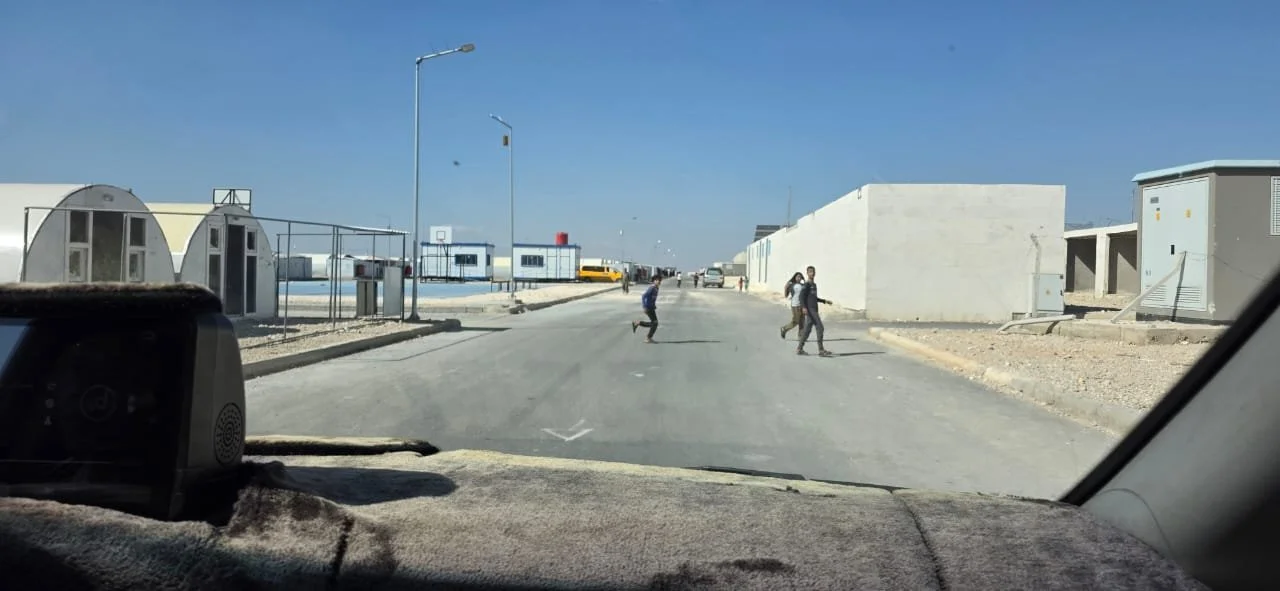
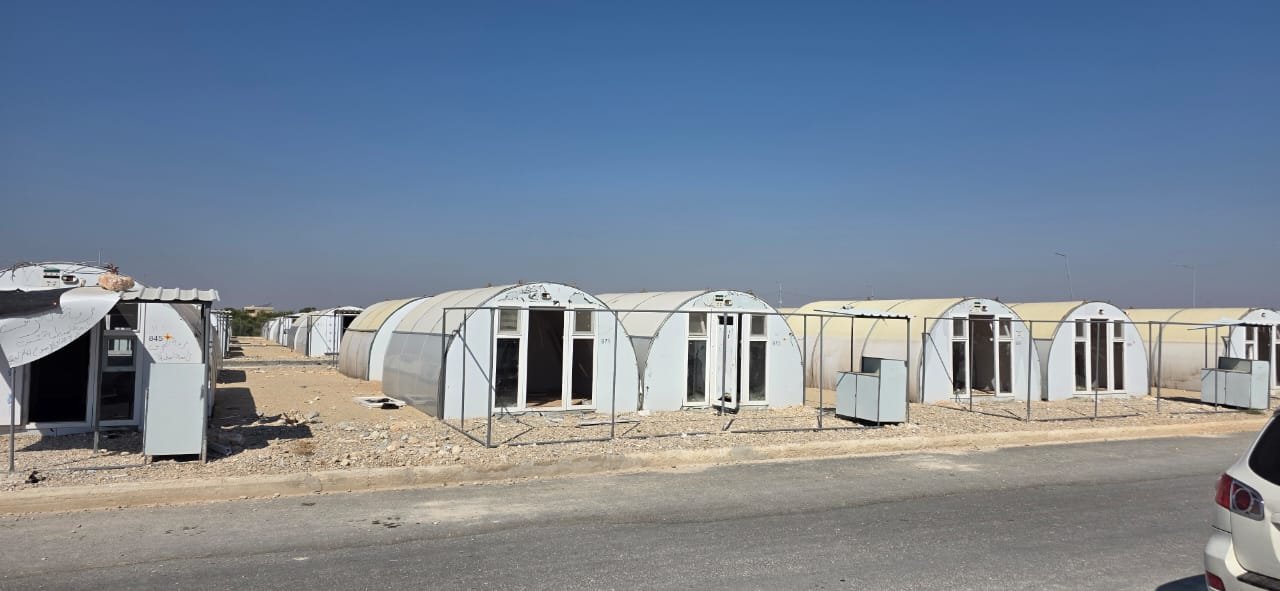
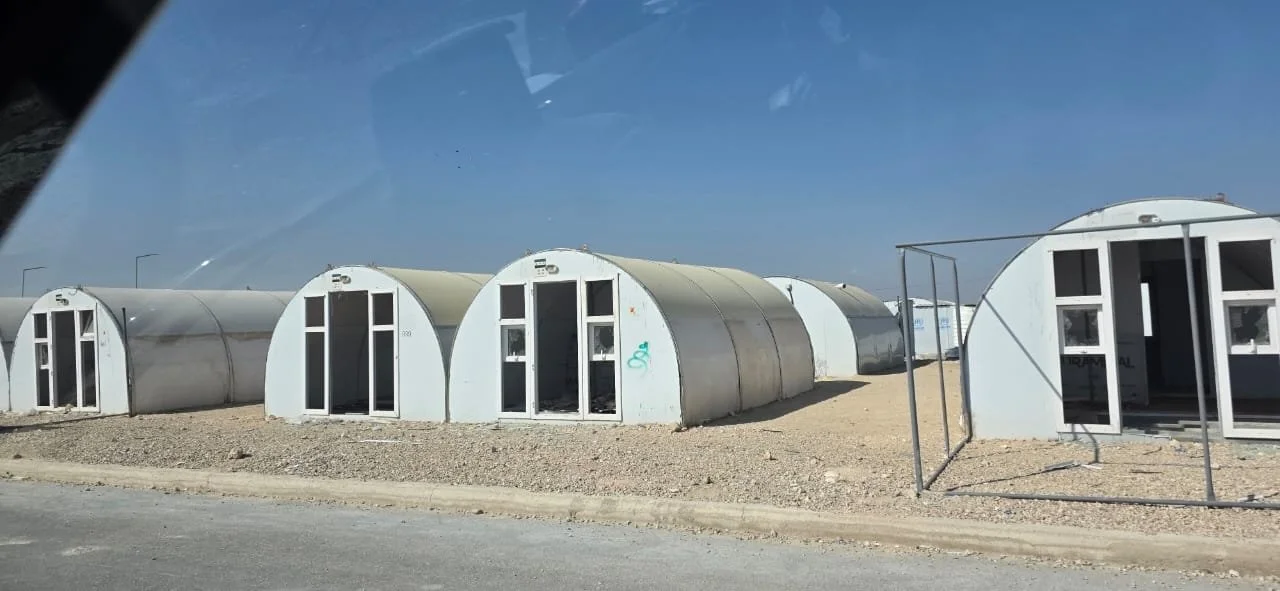
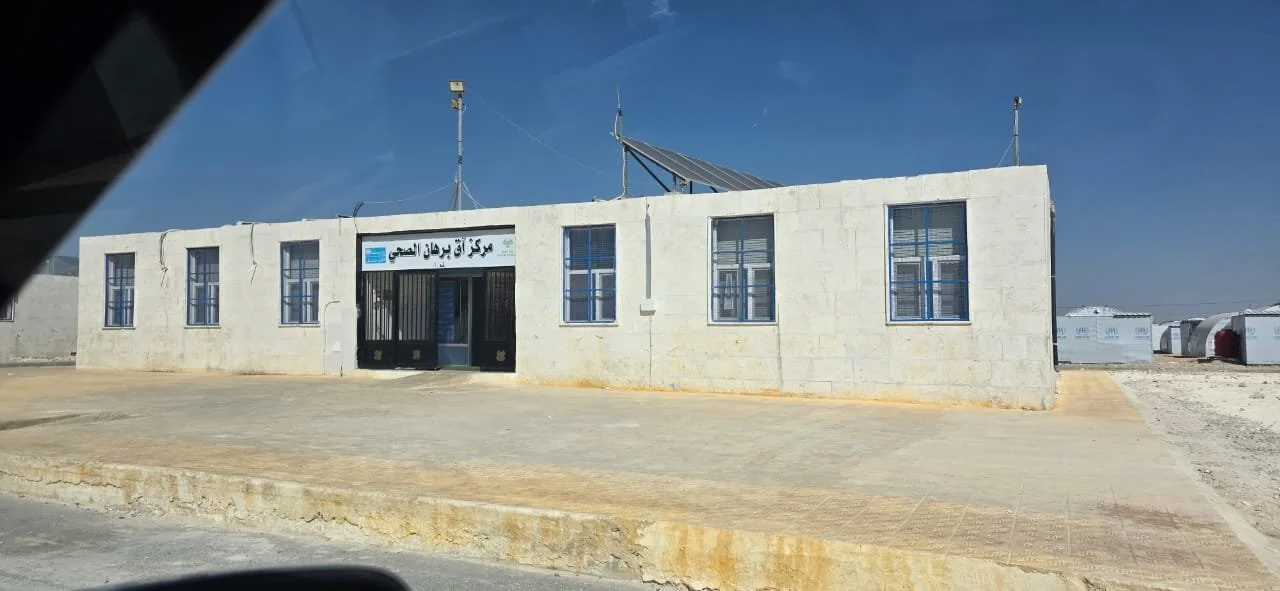
Aq Burhan does not look like an emergency camp. Paved roads run between rows of arched prefabricated shelters, with street lighting and concrete service buildings. A health centre, with solar panels on its roof, sits on one of the main roads.
A September 2026 mapping of services lists 66 service lines from 12 providers. They range from daily clinics and a child nutrition programme to reproductive health, child-friendly spaces, legal documentation and bread distribution.
How many people live there?
Here the accounts diverge. The camp administration told us Aq Burhan houses about 1,000 families, mostly Syrian and Iraqi, along with a small number of Indonesian families and one Russian family.
What our researcher saw suggested a considerably lower number, perhaps 400 to 500 families. Many shelters appeared empty, some with doors and windows missing. Residents' own estimates pointed the same way.
This was an observation, not a count, and we had no access to camp records. The gap may reflect registration records rather than actual presence, families who left after registering, or different ways of counting a "family". Establishing the real figure matters, because it shapes everything from aid planning to how the camp's future is decided.
Why it matters
For years, al-Hol epitomised one of the region's hardest unresolved problems. Moving families to a cleaner, better-serviced camp is a change, but it does not by itself answer the questions that matter most to the people living there: who can leave, on what terms, and what awaits them if they do.
Those questions are the focus of the next two pieces in this series. The second looks at how residents leave Aq Burhan, and who is left behind.