
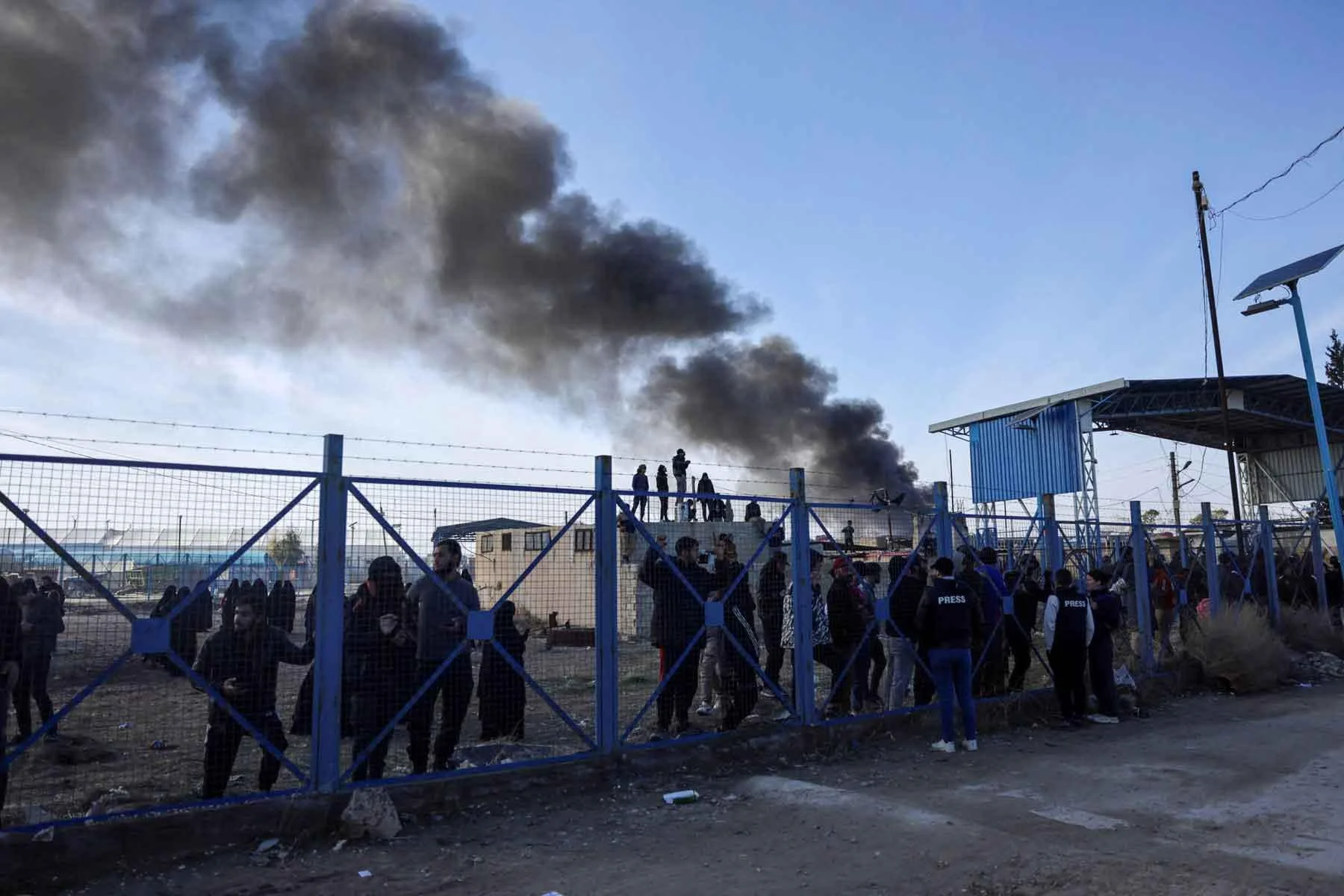
Detainees inside Al-Hol Camp, NES.
The Context
Last week, Iraq’s Supreme Judicial Council announced it has begun judicial investigations into nearly 2,000 ISIS detainees recently received from Syria. The investigations are part of a wider transfer operation announced by U.S. Central Command to move an estimated 7,000 ISIS-affiliated detainees from north-east Syria to Iraq so they remain in “secure detention facilities.” The pace and sequencing of the transfers have become contentious, with Baghdad reportedly requesting that the process slow down.
The Challenge
Iraq has extensive and unique experience prosecuting both Iraqi and foreign ISIS-affiliated detainees, but it does not have the resources to absorb a surge of cases at this scale. Baghdad already struggled to process earlier waves of ISIS detainees transferred from north-east Syria. The bottleneck lays with the number of trained prosecutors, investigators, and judges needed to screen detainees, investigate, build case files, and move proceedings through court. Iraq also lacks sufficient detention capacity to hold large numbers of detainees.
Adding up to 7,000 more detainees will almost certainly strain the judiciary’s ability to deliver credible prosecutions. Taken together, these pressures help explain why Baghdad has reportedly asked the U.S. to slow the pace of transfers.
Issues are already emerging
Baghdad is reportedly intensifying efforts to push third countries to take back their nationals held in Iraq. Only four detainees out of the 2,000 recently transferred are Iraqis. But this is unlikely to produce meaningful results. Many governments have long refused, delayed, or limited repatriations of suspected ISIS affiliates. This has left Iraq to carry the legal and detention burden. To fully prosecute these detainees under Iraqi jurisdiction, it must be proven that they committed crimes on Iraqi territory.
This practice presents major risks which are already surfacing. Al Jazeera reported that suspected ISIS French nationals recently transferred to Iraq alleged they were tortured to extract confessions and link them to crimes committed inside Iraq.
International response
Several governments have shown willingness to support efforts to hold ISIS members accountable.
This was clear in the international backing, led mainly by the U.S., that enabled the Syrian Democratic Forces (SDF) to detain ISIS suspects in north-east Syria and pursue limited accountability measures. But that model was always constrained. The SDF is not an internationally recognised government, and its ability to prosecute detainees through a fully legitimate, sustainable judicial process is inherently limited.
That support now needs to shift toward Iraq’s judiciary and prosecution pipeline.
If the burden is moving to Baghdad, then assistance must move with it. Without this, the surge in detainee transfers risks creating a long-term prosecution bottleneck inside Iraq.