
The Impact of Iran's Domestic Crisis on Iran-Aligned Militia Groups (IAMGs) in Iraq
Where to begin?
For nearly two decades, the relationship between Tehran and its Iraqi partners followed a predictable pattern. Money, weapons, training support, and strategic guidance flowed west from Iran to Iraq. But as of January 2026, the severe domestic instability in Iran is reversing this flow and posing an existential risk to the IAMGs in Iraq.
With the Iranian government focused on internal unrest and a collapsing currency, the IAMGs in Iraq are facing a reality check. Financial support from Tehran is being diverted towards domestic unrest and the Regime is even requesting additional Iraqi manpower to support its own security forces. These factors are creating a double drain on IAMGs at a critical moment in their history, as they face growing legal and political pressure at home regarding their weapons.
So how is the situation in Tehran reshaping the behaviour of armed factions in Baghdad, and what comes next for these Iran-Aligned Militia Groups?
Disarmament Pressure and the Change in Strategy
As we explored in our recent analysis, "Holy Weapons: The Prospects of Militia Disarmament in Iraq," groups like Asa'ib Ahl al-Haq and Kataib Hezbollah had already begun signalling a willingness to discuss disarmament in late 2025. At the time, statements by leaders like Qais al-Khazali - who claimed to "believe in confining arms to the hands of the state"- were largely viewed as tactical manoeuvres to buy time.
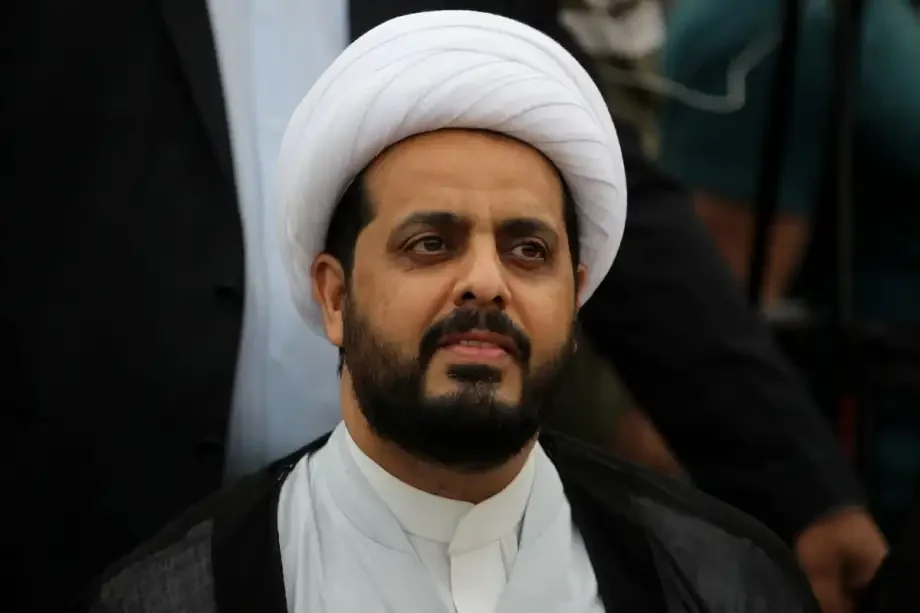
Qais Al-Khazali, pictured in 2021.
However, the crisis in Iran has reduced the time available for these negotiations. The conditions these factions reportedly set for disarmament are no longer just theoretical negotiating points; they have become immediate necessities. This is due to pressure from two main directions:
External Pressure: The 2026 US National Defense Authorization Act (NDAA) conditions 50% of US security aid to Iraq on "verifiable disarmament." This forces the Iraqi state to choose between funding its military or maintain the status quo with the militias. The U.S. Special Envoy to Iraq Mark Savaya has stated that "statements of intent alone are not sufficient," requiring irreversible action.
Internal Legal Pressure: The legal environment in Iraq is also undergoing serious change. In a significant statement this month, Judge Faiq Zidan, head of the Supreme Judicial Council, declared that with the defeat of terrorism, there is "no longer a need for weapons outside state control." With no need or justification for weapons outside of state control, there is a legal rationale for disarmament.
Political Implications of the Maliki Nomination
It is within this context, facing both financial restrictions and judicial pressure, that the Coordination Framework has nominated former Prime Minister Nouri al-Maliki. While this nomination might appear to be a show of strength, it serves a specific defensive function. The militias require a Prime Minister who can ensure that any process of "state control" over weapons allows them to maintain influence, rather than facing total demobilisation.
On the other hand, nominating al-Maliki faces significant challenges from within the Framework.
Incumbent Prime Minister Mohammed Shia al-Sudani suspended his bid for a second term, ostensibly clearing the field, but sources indicate this may be a strategic withdrawal. Sudani appears to be waiting to see if Maliki can overcome the opposition of Ayatollah Ali al-Sistani, who previously blocked his third term, as well as the potential lack of consensus among Sunni and Kurdish parties.
By pushing Maliki forward, the Coordination Framework risks entering a political deadlock.
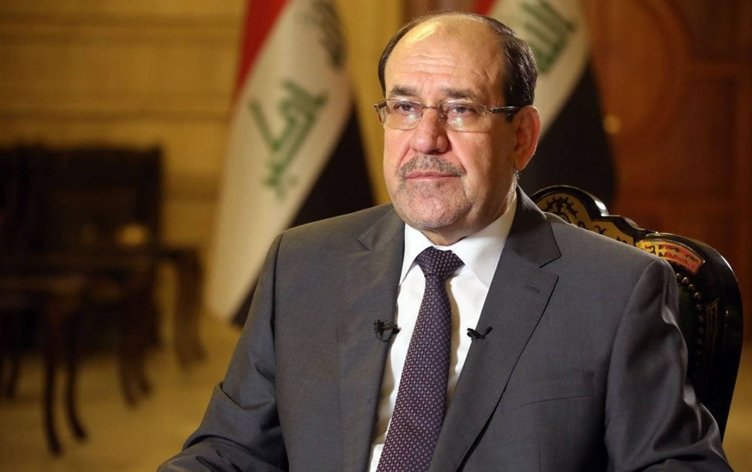
Nouri Al-Maliki
Movement of Iraqi Fighters to Iran
While managing political challenges in Baghdad, these groups are also involved in the security situation in Iran. Credible reports indicate that approximately 5,000 Iraqi militiamen have crossed the border to assist the Islamic Revolutionary Guard Corps (IRGC). These fighters, drawn primarily from Kataib Hezbollah and Harakat al-Nujaba, represent experienced personnel. This deployment shifts the focus of the "Axis of Resistance" from regional projection to securing the central hub in Tehran. This leaves their presence in Iraq reduced at a time when domestic opponents are increasingly challenging their authority.
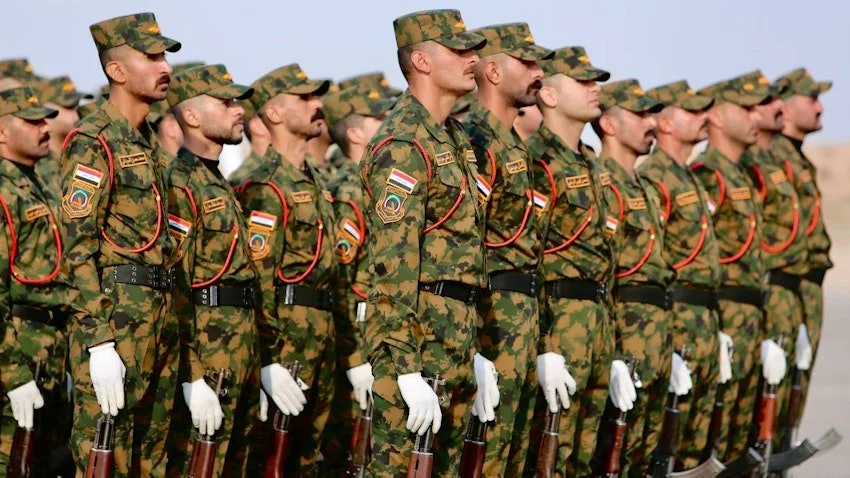
PMF soldiers in December 2025.
Economic Consequences and State Control
The economic downturn in Iran, with the currency losing significant value in January, has disrupted the financial support system for these groups.
Without consistent external funding, the militias are increasing their focus on the Iraqi state economy. This is the real reason for installing Al-Maliki, as the Coordination Framework requires an executive branch that will allow continued access to ministry budgets and economic committees to replace lost revenue from Iran.
Without these state resources, their ability to maintain their organisational structures and payrolls will be severely compromised.
An Uncertain Horizon
As we move further into 2026, the trajectory of these armed groups remains highly fluid. Rather than a predetermined outcome, their future will likely depend on how three critical variables evolve in the coming weeks.
-> The Volatility of the US-Iran Standoff
First, regional security remains precarious. While a fragile pause in escalation currently holds following Tehran’s reported decision to halt mass executions, the potential for a sudden shift remains high. Should the internal crisis in Iran deepen or violence resume, the "forward defence" doctrine of the Axis of Resistance could be tested. It is therefore likely that without clear, unified directives from a distracted Tehran, there is a risk of further fragmentation among the militia groups, who might miscalculate and launch uncoordinated attacks to save face. Such a scenario would place the Iraqi government in an difficult position, potentially triggering the harsh sanctions and diplomatic rupture that Baghdad has long sought to avoid.
Within days of editing this draft, advancing Syrian Army forces created a fresh challenge to manage in Northern Iraq. More analysis to follow on this topic soon.
-> The Political Deadlock in Baghdad
Second, the domestic political path is far from guaranteed. While Nouri al-Maliki’s nomination is a clear attempt to secure a political firewall, his path to the premiership is obstructed by significant constitutional and political hurdles - chief among them the historical reservations of the Marja'iyya. If this deadlock persists, the Coordination Framework may eventually be forced to seek a compromise. This could open the door for a return of Mohammed Shia al-Sudani as a consensus figure, though likely with strict conditions attached regarding the judiciary’s disarmament roadmap.10
-> The Challenge of Economic Adaptation
Finally, the economic variable may prove most decisive. As Iranian financial support dwindles, these groups face the pragmatic challenge of solvency. If they cannot secure the state budget access they seek through the next government, it is likely that they may be forced to accelerate their transition toward local revenue generation. This could manifest as an increase in illicit economic activities or predatory behaviour at border crossings, shifting the nature of the challenge they pose from a geopolitical one to a localised rule-of-law issue.
Ultimately, 2026 is shaping up to be a pivotal year. The status quo that has defined the militias' role in Iraq for the last decade is under unprecedented strain, but the final shape of what comes next will depend as much on decisions made in Najaf and Washington as those made in Tehran.